When South Florida homeowners invest in impact windows, they’re typically focused on hurricane protection and safety. What many don’t realize is that impact windows UV protection offers a substantial secondary benefit that can preserve your home’s interior for decades. The straightforward answer is yes—impact windows do block UV rays and significantly reduce fading, but the level of protection varies considerably based on the glass composition and coating technologies used.
Understanding how impact windows UV protection works requires looking beyond the basic laminated glass structure. While the primary purpose of impact-resistant windows is to withstand hurricane-force winds and flying debris, the materials and manufacturing processes involved create inherent UV-blocking properties that far exceed standard single-pane glass.
The Science Behind Impact Glass UV Protection
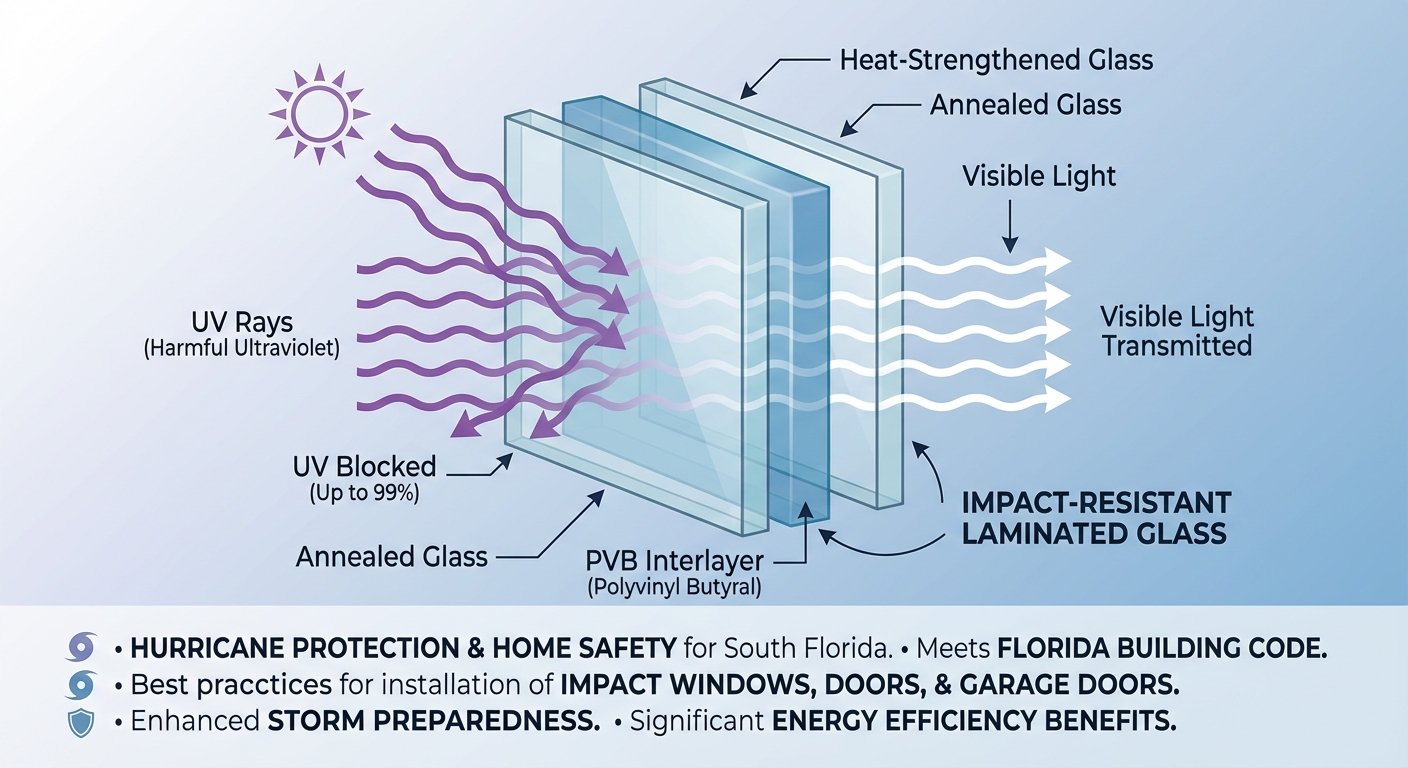
Hurricane windows UV rays protection stems from the laminated glass construction itself. Impact-resistant windows consist of two panes of glass bonded together with a polyvinyl butyral (PVB) interlayer or similar polymer material. This interlayer naturally blocks approximately 99% of harmful ultraviolet radiation without any additional coatings.
Standard single-pane glass blocks only about 50% of UV-A rays while allowing nearly all UV-B rays to pass through. The PVB interlayer in impact windows creates a barrier that absorbs and reflects UV radiation before it enters your home. This fundamental difference explains why homeowners with impact windows notice dramatically less fading of furniture, artwork, flooring, and window treatments.
Understanding UV Radiation Types
UV radiation consists of three categories: UV-A, UV-B, and UV-C. UV-C is absorbed by Earth’s atmosphere, but UV-A and UV-B reach your home’s windows. UV-A rays penetrate deeper and cause gradual fading and deterioration of materials over time. UV-B rays are more intense but less penetrating. Impact glass prevent fading by blocking both types effectively, with the PVB interlayer providing exceptional UV-A protection that standard glass cannot match.
Low-E Coatings Enhance UV Protection Further
While basic impact windows provide excellent UV protection, Low-E impact windows take performance to another level. Low-emissivity coatings are microscopically thin metallic layers applied to the glass surface that reflect infrared energy while maintaining visible light transmission.
Low-E impact windows offer several advantages for South Florida homeowners:
- Enhanced UV blocking up to 99.9% of harmful rays
- Reduced solar heat gain, lowering cooling costs by 15-25%
- Protection against infrared radiation that contributes to fading
- Improved color stability and clarity of glass over time
- Better performance in direct sun exposure common in Palm Beach, Broward, and Collier counties
Premium manufacturers like PGT, CGI, and ES Windows incorporate advanced Low-E coatings in their impact-resistant products. These coatings are applied during manufacturing and become a permanent part of the glass structure, unlike aftermarket window films that can bubble, peel, or discolor over time.
What About Impact Doors and Garage Doors?
UV protection extends beyond windows. Impact doors, particularly those with glass panels or sidelights, provide the same UV-blocking benefits. French doors, sliding glass doors, and entry doors with decorative glass all benefit from the laminated glass construction that blocks harmful UV rays.
Custom impact glass garage doors represent an increasingly popular option for South Florida homeowners who want natural light in their garage without compromising hurricane protection or UV exposure. These specialized garage doors combine impact-resistant laminated glass panels with aluminum or vinyl frames, creating an architectural feature that protects both your vehicles and stored items from UV damage while meeting Florida Building Code requirements for wind load resistance.
Manufacturers including Hurricane Master, Amarr, and Clopay offer impact-rated garage door systems with various glass configurations. The laminated glass panels in these doors provide the same UV protection as impact windows, preventing fading of vehicles, storage containers, and anything else housed in your garage.
Real-World Fading Prevention Results
Homeowners who upgrade to impact windows report noticeable differences in how well their interiors maintain their appearance. Hardwood flooring in direct sunlight that previously showed fading or discoloration within 18-24 months can maintain its original appearance for a decade or more with proper UV protection.
In Martin and Lee counties, where waterfront properties face intense sun exposure year-round, impact windows UV protection proves especially valuable. Artwork, photographs, and decorative fabrics that would fade within months behind standard glass remain vibrant for years. The investment in quality impact-resistant windows with Low-E coatings pays dividends through reduced replacement costs for furnishings and finishes.
UV Protection vs. Visible Light Transmission
A common misconception is that blocking UV rays requires making your home darker. Quality impact windows block harmful UV radiation while maintaining excellent visible light transmission, typically 60-75% depending on glass thickness and coatings.
UV blocking windows allow natural light to illuminate your living spaces without the damaging effects. This balance is achieved through selective wavelength filtering—the PVB interlayer and Low-E coatings block ultraviolet and infrared wavelengths while allowing visible light spectrum through.
When selecting impact windows or doors, request the visible transmittance (VT) rating along with the UV transmittance specification. Higher VT ratings mean more natural light, while lower UV transmittance indicates better fading protection. Reputable manufacturers provide complete performance data for every product line.
Additional Fading Factors Beyond UV Rays
While UV radiation causes approximately 40-60% of fading, other factors contribute to material deterioration. Visible light accounts for 25% of fading, heat causes another 25%, and humidity, air quality, and material composition influence the remaining percentage.
Impact windows address multiple fading factors simultaneously:
- UV protection from laminated glass and coatings
- Reduced heat transmission through Low-E coatings and insulated glass units
- Better humidity control through improved sealing and reduced air infiltration
- Protection from environmental pollutants and salt air in coastal areas
This comprehensive protection explains why impact windows outperform aftermarket solutions like window films or treatments that only address UV rays without controlling heat gain or improving the building envelope.
Florida Building Code and UV Protection Standards
The Florida Building Code mandates impact resistance standards for hurricane protection but doesn’t specifically regulate UV blocking performance. However, the energy code requirements under Florida’s Building Energy Efficiency Standards encourage Low-E coatings and performance glazing that inherently provides superior UV protection.
As a Florida Certified General Contractor, we ensure all impact window and door installations meet or exceed code requirements for both structural performance and energy efficiency. This compliance delivers hurricane protection while maximizing UV blocking benefits for homeowners throughout Palm Beach, Broward, and Southwest Florida regions.
Choosing the Right Impact Windows for Maximum UV Protection
When selecting hurricane windows UV rays protection, consider these factors:
Glass Specifications
Request the UV transmittance rating—quality impact windows should block 99% or more. Ask about the PVB interlayer thickness and whether additional UV inhibitors are incorporated. Thicker interlayers generally provide better performance across all metrics including UV protection.
Low-E Coating Options
Different Low-E formulations optimize for various priorities. For South Florida applications, spectrally selective Low-E coatings that maximize visible light while blocking UV and infrared radiation provide the best balance. Manufacturers like PGT and CGI offer multiple Low-E options tailored to climate zones.
Glass Tint and Color
While clear impact glass provides excellent UV protection, tinted options offer additional solar control. Bronze, gray, and blue tints reduce visible light transmission along with UV exposure. However, tinting may affect views and natural lighting, so evaluate your priorities carefully.
Insulated Glass Units
Double-pane impact windows with Low-E coatings and argon or krypton gas fills provide the ultimate performance. The insulated design enhances both UV protection and thermal efficiency, though at higher initial cost.
Professional Installation Matters for UV Performance
Even the best impact windows won’t deliver optimal UV protection if improperly installed. Gaps in sealing, improper flashing, or incorrect glazing techniques can allow UV exposure around window edges and compromise overall performance.
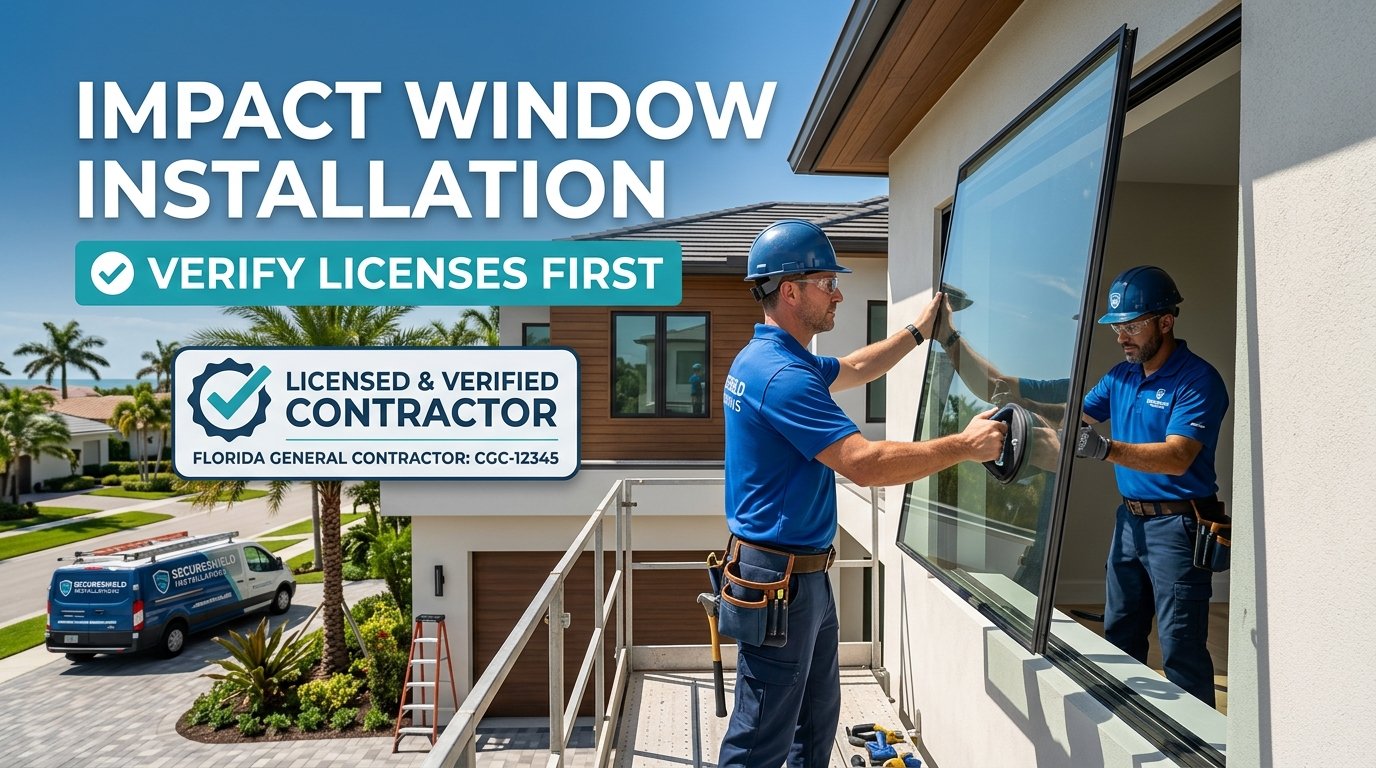
Professional installation ensures proper sealing, correct structural anchoring, and quality control that protects your investment. Military family-owned businesses serving South Florida understand the importance of doing the job right the first time—hurricane protection and UV blocking only work when windows are installed to manufacturer specifications and building code standards.
Long-Term Value of UV Protection
Calculating the value of impact windows UV protection involves more than just prevented fading. Consider these long-term benefits:
- Extended lifespan of flooring, furniture, and artwork worth thousands of dollars
- Reduced air conditioning costs from lower solar heat gain
- Maintained interior aesthetics without frequent redecorating or replacement
- Higher property values from quality improvements and energy efficiency
- Insurance premium reductions for approved impact protection
Homeowners in Charlotte and Collier counties who installed quality impact windows typically see payback periods of 7-12 years when accounting for all benefits, including energy savings and prevented replacement costs for furnishings.
Taking Action: Protecting Your Home Investment
Impact windows truly do block UV rays and prevent fading, with performance that surpasses standard glass by substantial margins. The combination of laminated glass construction, PVB interlayers, and Low-E coatings creates comprehensive protection that extends the life and appearance of everything inside your home.
Whether you’re considering impact windows, impact doors, or custom impact glass garage doors, partnering with experienced professionals ensures you receive quality products properly installed. Industry-leading manufacturers like PGT, CGI, ES Windows, Hurricane Master, Therma-Tru, Lawson, Amarr, and Clopay offer proven solutions backed by rigorous testing and warranties.
Schedule a consultation to discuss your specific needs, evaluate your home’s UV exposure patterns, and explore impact protection options that deliver both hurricane safety and long-term interior preservation. Let’s protect your South Florida home from storms and sun damage with solutions engineered for our unique climate and code requirements.