Every day you delay installing impact windows and doors on your South Florida home, you’re accumulating costs you probably haven’t calculated. While the initial investment in impact-resistant protection might seem substantial, the true expense of postponing this upgrade goes far beyond the sticker price. From rising material costs and increasing insurance premiums to missed energy savings and potential storm damage, the financial impact of waiting can quickly surpass the cost of installation itself.
Understanding these hidden costs isn’t about creating urgency through fear—it’s about making an informed decision based on the real financial implications of timing your impact window investment.
Rising Material and Labor Costs
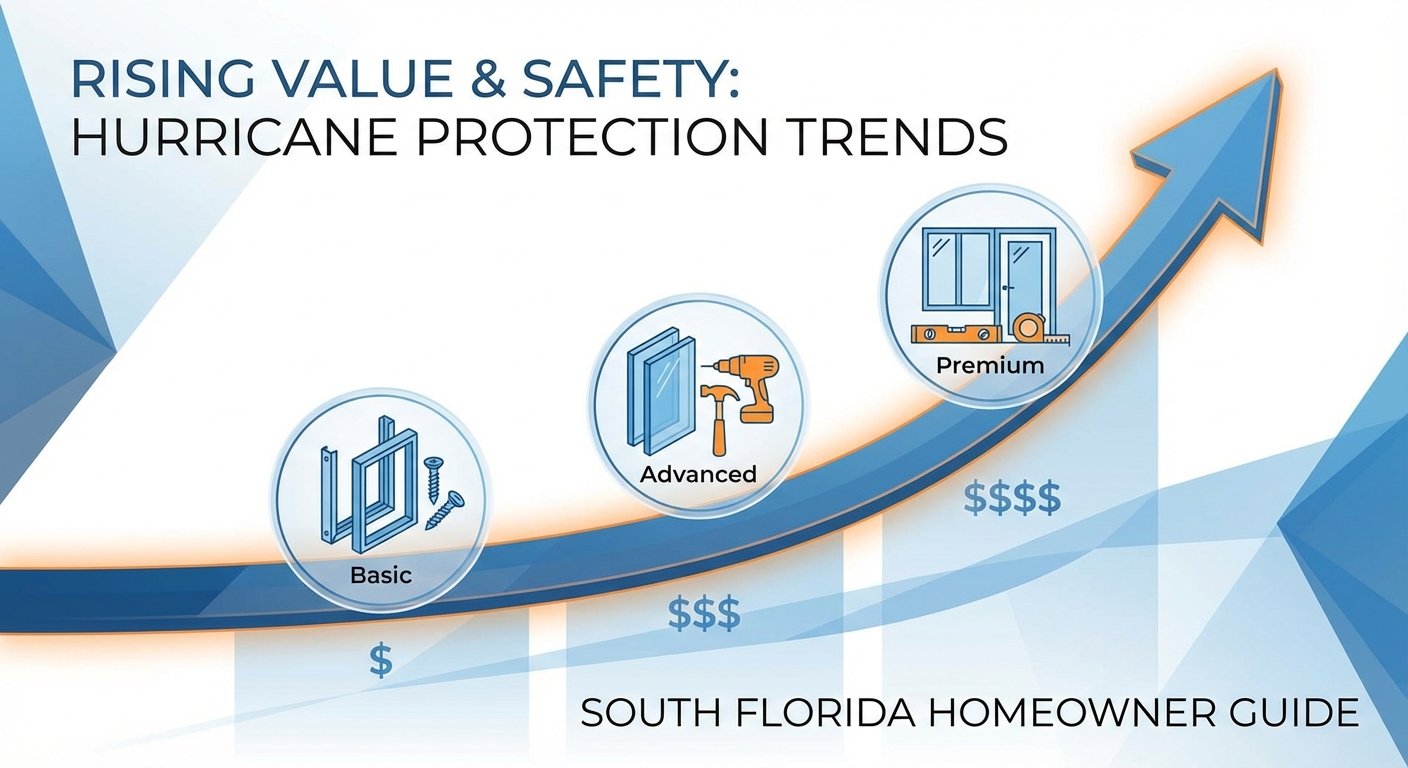
Impact window prices haven’t remained static, and the trend continues upward in 2026. The cost of delaying impact windows includes the near-certainty of higher prices when you finally decide to move forward.
Manufacturing materials for impact-resistant products—tempered glass, polyvinyl butyral (PVB) interlayers, aluminum extrusions, and specialized hardware—have seen consistent price increases driven by supply chain dynamics, raw material costs, and manufacturing capacity constraints. Quality manufacturers like PGT, CGI, and ES Windows maintain strict standards that require premium materials, and these costs inevitably transfer to the final product.
Labor costs present another escalating factor. Certified installation teams with Florida Building Code expertise and manufacturer training don’t come at bargain rates, nor should they. Professional installation requires specific skills, proper licensing, and extensive experience to ensure your impact windows perform as designed during hurricane-force winds. In South Florida’s competitive construction market, these specialized labor rates continue trending upward.
Homeowners who delayed installation from 2023 to 2026 have typically seen price increases of 15-25% on comparable projects. That calculation becomes even more significant on larger homes requiring complete window and door replacement throughout Palm Beach, Broward, or Collier County properties.
Insurance Premium Penalties
Florida homeowners insurance costs have become a critical financial planning concern, and the absence of impact-resistant protection directly affects your premiums. Insurance companies recognize that homes without proper hurricane protection represent higher risk—and they price policies accordingly.
The premium difference between homes with and without impact windows can range from hundreds to thousands of dollars annually. According to current Florida insurance market data, homeowners with full impact protection typically receive discounts of 20-45% compared to homes relying solely on shutters or no protection at all.
Consider this calculation: if your annual premium difference amounts to $1,500 per year without impact windows, waiting three years to install costs you $4,500 in unnecessary insurance expenses—money that could have contributed toward your impact window investment. Over a decade, that same difference totals $15,000 in avoidable costs.
Some insurance carriers in high-risk coastal areas of Martin, Lee, and Charlotte Counties now require impact-resistant protection as a condition of coverage for certain properties. Homeowners who wait may find themselves facing not just higher premiums, but reduced coverage options or even non-renewal notices.
Energy Efficiency Losses
Single-pane windows and older sliding glass doors bleed conditioned air year-round. In South Florida’s climate, your air conditioning system works overtime compensating for thermal transfer through inefficient glazing.
Impact windows feature insulated glass units with Low-E coatings that dramatically reduce heat transfer. The energy savings begin immediately upon installation and continue for the entire lifespan of the product—typically 20-30 years with proper maintenance.
Average South Florida homes can save 15-30% on cooling costs after upgrading to impact-resistant windows and doors. For a home with $250 monthly cooling costs, that represents $37-75 in monthly savings, or $450-900 annually. Multiply those savings across the years you delay installation, and the cumulative energy waste becomes substantial.
When to install impact windows from an energy efficiency perspective? Immediately. Every month of delay represents continued unnecessary energy consumption and higher utility bills.
Property Value Considerations
Impact windows and doors represent a tangible property value enhancement that prospective buyers recognize and appreciate. Homes equipped with complete impact protection consistently command higher sale prices and sell faster than comparable properties requiring hurricane protection upgrades.
Real estate data from Palm Beach and Broward County markets shows that impact-resistant protection typically returns 70-85% of installation costs in immediate property value increase. More importantly, homes without this protection often face buyer resistance, inspection concerns, and negotiation disadvantages.
If you’re planning to sell within the next 3-5 years, delaying installation means missing the opportunity to recoup a significant portion of your investment through increased sale price. Waiting until you’re ready to list the property creates time pressure that may force you to either sell without the upgrade (leaving money on the table) or rush through installation on a compressed timeline.
Hurricane Season Preparation Timing
Hurricane season preparation isn’t just about the Atlantic hurricane season calendar—it’s about contractor availability and installation scheduling realities. Impact window installation timing becomes critical when you understand seasonal demand patterns.
Installation companies experience predictable seasonal surges. Spring months (March through May) see increased activity as homeowners prepare before June 1st. Post-storm periods create immediate demand spikes that can extend scheduling backlogs by months.
Professional installation requires proper scheduling, permitting, inspections, and installation time. A complete home retrofit isn’t accomplished in a single day. Larger projects involving multiple impact windows, impact doors, custom impact glass garage doors, and entry door systems may require several days or weeks to complete properly.
Homeowners who wait until April or May to begin the process frequently discover that quality contractors are booked solid through hurricane season. Those who start after a hurricane watch is issued often find no available installation capacity whatsoever—manufacturers and installers cannot safely work during storm threats.
The off-season months (September through February) typically offer better scheduling flexibility, more installation crew availability, and contractors with capacity to accommodate your timeline preferences. This doesn’t mean discounted quality—it means better service and attention to your specific project.
Risk of Storm Damage
The most significant hidden cost of waiting is the risk you’re accepting each hurricane season. South Florida remains in active hurricane corridors where major storm impacts aren’t hypothetical—they’re historical certainties with unpredictable timing.
A single hurricane can cause catastrophic damage to unprotected homes. Wind-driven rain entering through failed windows causes interior damage to walls, floors, ceilings, furniture, electronics, and personal belongings. Water intrusion leads to mold growth that requires extensive remediation. Structural damage from wind pressure or flying debris can render homes uninhabitable.
Insurance deductibles for hurricane damage typically operate on percentage basis (2-10% of dwelling coverage) rather than fixed amounts. For a home insured at $500,000 with a 5% hurricane deductible, you’re responsible for the first $25,000 of damage. That single-event out-of-pocket cost likely exceeds the total investment in complete impact protection.
Beyond financial calculations, consider the disruption, stress, and safety concerns of evacuation, temporary housing, and reconstruction. These intangible costs don’t appear on balance sheets but significantly impact your quality of life.
Financing and Tax Considerations
Current interest rate environments and available financing options influence the total cost of impact window projects. Rates fluctuate based on broader economic conditions, and favorable financing windows don’t remain open indefinitely.
Homeowners considering financing should evaluate current rates against historical trends. Delaying during periods of lower interest rates means potentially paying higher financing costs when you eventually move forward.
Florida property tax assessments may change following significant home improvements, though impact-resistant protection installations typically represent reasonable value enhancements rather than dramatic reassessments. Some local jurisdictions have offered property tax incentives for hurricane hardening upgrades—programs that may not continue indefinitely.
Making the Investment Decision
Understanding impact window price increases, insurance implications, energy costs, and storm risks provides the complete financial picture for timing your installation decision.
Working with a Florida Certified General Contractor ensures compliance with current Florida Building Code requirements and proper installation techniques that allow your impact windows and doors to perform as designed. Partnerships with industry-leading manufacturers like PGT, CGI, ES Windows, Hurricane Master, Therma-Tru, Lawson, Amarr, and Clopay provide access to proven products backed by comprehensive warranties and engineering certifications.
Your investment should include all vulnerable openings—windows, sliding glass doors, entry doors, and garage doors. Custom impact glass garage doors provide the same protection for your home’s largest opening while maintaining aesthetic appeal and functionality. Standard garage doors represent significant vulnerability that undermines the protection provided by impact windows elsewhere.
Professional installation matters as much as product selection. Improperly installed impact windows fail during storms regardless of product quality. Installation teams must understand structural attachment requirements, proper shimming and leveling, appropriate sealant application, and Florida Building Code inspection standards.
Taking Action
The hidden costs of waiting to install impact windows accumulate daily through higher insurance premiums, wasted energy, delayed property value enhancement, and continued storm vulnerability. While the initial investment requires careful consideration, postponing the decision typically increases total costs rather than reducing them.
As a military family-owned company serving Palm Beach, Broward, Collier, Martin, Lee, and Charlotte Counties, we understand that this investment represents more than financial calculation—it’s about protecting your family, your home, and your peace of mind during storm season. Our three decades of South Florida experience has taught us that homeowners who act proactively rather than reactively consistently make better decisions and achieve better outcomes.
Schedule a professional consultation to receive a detailed assessment of your property’s specific needs, accurate pricing based on current material and labor costs, and realistic timelines for completion. Understanding your options today provides the information you need to make the right decision for your circumstances—whether that means moving forward immediately or planning strategically for installation during optimal timing windows.
Don’t let another hurricane season pass with your home unprotected. Contact us today to discuss how impact windows, impact doors, and custom impact glass garage doors can provide comprehensive hurricane protection while delivering immediate benefits through insurance savings, energy efficiency, and enhanced security. The best time to install impact protection is before you need it—and that time is now.