Impact windows represent a significant investment in your South Florida home’s safety and value, but even the highest-quality products from manufacturers like PGT, CGI, or ES Windows can fail if installation isn’t performed correctly. Unfortunately, poor installation practices plague the industry, leaving homeowners vulnerable during hurricane season and facing unexpected repair costs. Understanding the warning signs of improper impact window installation can save you from catastrophic failures when you need protection most.
Why Professional Installation Matters
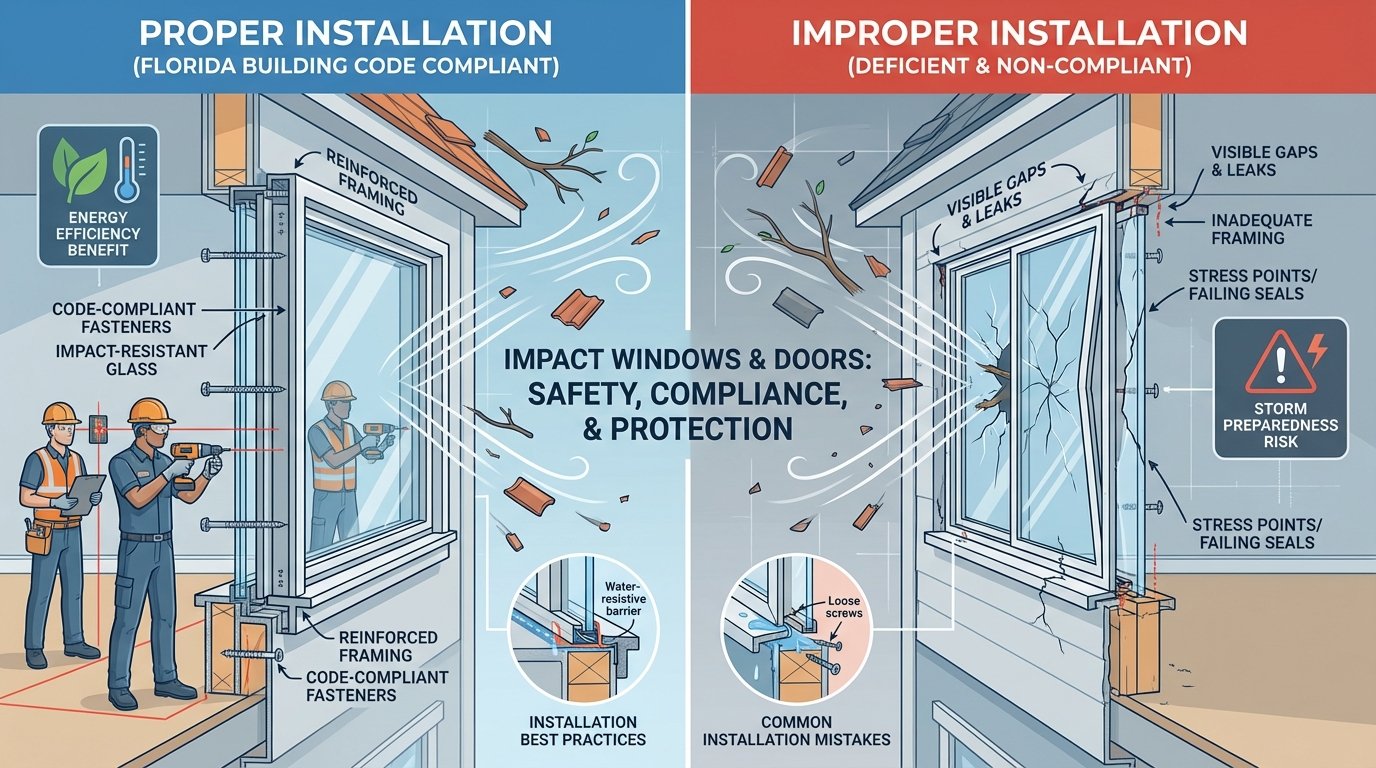
The Florida Building Code establishes stringent requirements for impact window and door installations throughout Palm Beach, Broward, and Southwest Florida counties. These specifications exist for good reason—improper installation compromises the structural integrity of your hurricane protection system. A window may pass impact testing in laboratory conditions, but without correct installation, that same product can fail during an actual storm event.
Working with a Florida Certified General Contractor ensures your installation meets or exceeds code requirements. The difference between amateur and professional installation often becomes apparent only when conditions test the system’s limits, making early detection of installation problems crucial.
Sign #1: Visible Gaps Between the Window Frame and Wall
One of the most obvious indicators of poorly installed impact windows is visible gaps or spaces between the window frame and the surrounding wall structure. These gaps compromise the window’s ability to maintain its structural integrity during high winds and create pathways for water intrusion.
Proper impact window installation requires precise measurements and careful shimming to ensure the frame sits plumb and level within the opening. The gap between the frame and rough opening should be consistently filled with appropriate materials and sealed according to manufacturer specifications and Florida Building Code requirements.
If you can see daylight through gaps around your impact windows, or if you notice inconsistent spacing on different sides of the frame, this indicates installation shortcuts that will compromise performance. These gaps also reduce energy efficiency, allowing conditioned air to escape and increasing your cooling costs throughout the year.
Sign #2: Water Leaks or Moisture Intrusion
Impact window water leaks represent one of the most common and damaging consequences of improper installation. Water intrusion can occur through multiple failure points, including inadequate sealing, improper flashing installation, or incorrect anchoring that allows the frame to flex during weather events.
Check for these water-related warning signs:
- Water stains on interior walls or window sills after rain events
- Dampness or moisture accumulation around the window frame
- Mold or mildew growth near windows
- Peeling paint or deteriorating drywall around window openings
- Standing water on window sills or tracks
In South Florida’s frequent rain conditions, even minor sealing defects become apparent quickly. However, some leaks only manifest during wind-driven rain events when water is forced into vulnerable areas. If you notice water intrusion specifically during storms or high winds, the installation likely lacks proper weatherproofing or the anchoring system allows excessive movement.
Sign #3: Difficulty Operating Windows
Impact windows and doors should operate smoothly despite their heavier construction. If your new impact windows are difficult to open, close, or lock, this suggests improper installation rather than product defects.
Common operational issues stemming from bad impact window installation include:
- Windows that stick or bind when opening or closing
- Locks that don’t align properly or require excessive force
- Frames that appear twisted or out of square
- Difficulty achieving a complete seal when closing
- Hardware that seems misaligned or improperly adjusted
These problems often result from failing to properly level and square the frame during installation. When frames aren’t plumb and level, the sashes won’t align correctly with their openings, creating operational difficulties and compromising the seal. This misalignment also stresses the hardware and can lead to premature component failure.
Sign #4: Inadequate or Missing Anchoring
The anchoring system connecting your impact windows to the building structure is critical for hurricane performance. Florida Building Code specifies anchor types, sizes, spacing, and installation depth based on the window size and local wind load requirements. Impact window installation mistakes involving anchoring represent some of the most dangerous defects.
Unless you can view the installation from both interior and exterior perspectives, inadequate anchoring may not be immediately visible. However, several indicators suggest anchoring problems:
- Excessive movement or flexing of the frame when you apply pressure
- Visible gaps that change size when you push on the frame
- Anchors spaced too far apart (typically should be no more than 12-18 inches)
- Anchors installed into inappropriate materials or at insufficient depth
- Missing corner anchors or inadequate anchor placement near high-stress areas
In some cases, installers use incorrect anchor types or insufficient quantities to meet code requirements. This cost-cutting practice isn’t apparent until strong winds test the system. A qualified inspector can evaluate whether your installation meets the anchoring specifications required for your specific location and product.
Sign #5: Damaged or Improperly Applied Sealants
Sealants and weatherproofing materials form the first line of defense against water intrusion and air infiltration. Poorly installed impact windows often exhibit sealant application problems that compromise performance immediately or develop into larger issues over time.
Inspect your windows for these sealant-related concerns:
- Gaps or voids in the sealant bead
- Sealant that appears thin, inconsistent, or poorly tooled
- Wrong sealant type for the application
- Sealant applied over dirt, debris, or wet surfaces
- Cracking, peeling, or separation of sealant shortly after installation
- Sealant visible in areas where it shouldn’t be, suggesting messy or careless work
Professional installations use appropriate sealant types specified by the window manufacturer and apply them correctly to clean, dry surfaces. The sealant should create consistent, continuous beads without gaps. When sealants fail prematurely, this often indicates the installer didn’t follow proper surface preparation procedures or used incompatible materials.
Sign #6: Incorrect or Missing Flashing
Flashing directs water away from vulnerable areas around window and door openings. Proper flashing installation is essential in South Florida, where heavy rainfall and wind-driven rain can find any weakness in the building envelope. However, flashing problems are among the most frequently overlooked impact window installation problems.
Many installers skip proper flashing entirely or install it incorrectly, creating conditions for water intrusion that may not become apparent until significant damage has occurred. While flashing is often concealed behind siding or stucco, you may notice these warning signs:
- Water stains appearing above or to the sides of windows rather than directly at the frame
- Deterioration of exterior finishes near window openings
- Water intrusion that seems to come from behind the window frame rather than through it
On newer installations, you might request documentation showing that proper flashing was installed according to Florida Building Code requirements and manufacturer specifications. Reputable contractors photograph the flashing installation before concealing it behind finish materials.
Sign #7: Missing or Incorrect Permits and Inspections
Perhaps the most serious red flag isn’t visible on the windows themselves—it’s the absence of proper permits and building department inspections. Impact window and door installations in Palm Beach, Broward, Martin, Lee, Charlotte, and Collier counties require permits and must pass inspections verifying code compliance.
If your installer didn’t pull permits or arrange for inspections, several concerns arise:
- The installation likely doesn’t meet Florida Building Code requirements
- You have no third-party verification of proper installation practices
- Your homeowner’s insurance may not provide expected coverage
- You may face difficulties selling your home when unpermitted work is discovered
- The municipality can require removal and reinstallation at your expense
Some homeowners are tempted to skip permitting to save time or money, but this decision creates liability far exceeding any short-term savings. Permitted installations provide documentation that the work was performed correctly and inspected by qualified officials, offering peace of mind and protecting your investment.
What To Do If You Suspect Installation Problems
If you’ve identified any of these warning signs, take action promptly. Installation defects typically worsen over time and cause additional damage to your home’s structure. Water intrusion problems lead to mold growth and wood rot, while improper anchoring creates life-threatening vulnerabilities during hurricane events.
Contact your original installer first to address concerns. Reputable contractors stand behind their work and will correct deficiencies. However, if the installer is unresponsive or you’re unsatisfied with their response, seek a second opinion from a Florida Certified General Contractor experienced with impact window installations.
A professional evaluation can identify specific defects and recommend appropriate remediation. In some cases, minor adjustments or additional sealing may resolve issues. Severe problems might require complete reinstallation to ensure your home’s protection and your family’s safety.
Document all problems with photographs and detailed notes, including dates when you first noticed issues and any weather events that seemed to trigger or worsen problems. This documentation supports warranty claims or potential legal action if necessary.
Protecting Your Investment Through Quality Installation
Impact windows and doors from industry-leading manufacturers like PGT, CGI, ES Windows, Hurricane Master, and others provide exceptional protection when installed correctly. However, the best products cannot perform as designed if installation doesn’t meet professional standards and code requirements.
Choosing an experienced contractor who partners with respected manufacturers and maintains Florida General Contractor certification ensures your installation receives the attention to detail it deserves. Quality installation protects your family, preserves your property value, maximizes energy efficiency benefits, and secures the insurance premium reductions you’re entitled to receive.
Military family-owned businesses often bring an additional commitment to excellence, understanding that shortcuts put people at risk. This dedication to doing things right the first time reflects values developed through military service—attention to detail, accountability, and unwavering standards.
Ensure Your Home’s Protection With Professional Installation
Don’t leave your family’s safety and your property’s protection to chance. If you’re considering impact windows or doors, or if you’ve noticed any of these warning signs in existing installations, professional evaluation and correction are essential.
Working with experienced professionals who understand South Florida’s unique challenges, maintain proper licensing and insurance, use quality products from trusted manufacturers, and stand behind their work with solid warranties gives you confidence that your hurricane protection system will perform when you need it most. Your home deserves installation that meets the highest standards—because when the next storm approaches, proper installation makes all the difference.