Installing impact windows, doors, or custom impact glass garage doors represents a significant investment in protecting your South Florida home. However, the installation itself is only part of the equation. Florida Building Code compliance requires thorough inspections to ensure your hurricane protection performs as designed when storms arrive. Understanding what inspectors look for—and why these checkpoints matter—helps homeowners ensure their investment delivers the protection, insurance benefits, and peace of mind they expect.
Why Florida Building Code Inspections Are Non-Negotiable

Florida maintains some of the nation’s strictest building codes specifically because of our hurricane exposure. The Florida Building Code requires inspections at multiple stages during impact window and door installations to verify compliance with product approvals, manufacturer specifications, and structural requirements. These inspections aren’t bureaucratic red tape—they’re quality control measures that protect homeowners from improper installations that could fail during hurricanes.
Working with a Florida Certified General Contractor ensures your project navigates the inspection process correctly from the start. Contractors who understand the code requirements schedule inspections at appropriate intervals and prepare installations to pass on the first review, avoiding costly delays and corrections.
Pre-Installation Requirements: Product Approval Documentation

Before any installation work begins, your contractor must verify that chosen products have valid Florida Product Approvals. Every impact window, door, and custom impact garage door installed in Florida requires a Notice of Acceptance (NOA) issued by the Florida Building Commission. This NOA confirms the product has undergone rigorous testing and meets performance standards for wind resistance, impact protection, and structural integrity.
Quality manufacturers like PGT, CGI, ES Windows, and Hurricane Master maintain current NOAs for their product lines. Your contractor should provide NOA numbers for all products specified in your project before installation. Inspectors verify these approvals during the building permit review and again during field inspections.
The NOA specifies approved installation methods, fastener types, spacing requirements, and acceptable opening sizes. Deviating from NOA specifications can result in inspection failures and potentially void product warranties. This documentation becomes part of your permanent building record and may be requested by insurance companies when applying for premium discounts.
The Impact Window Inspection Timeline
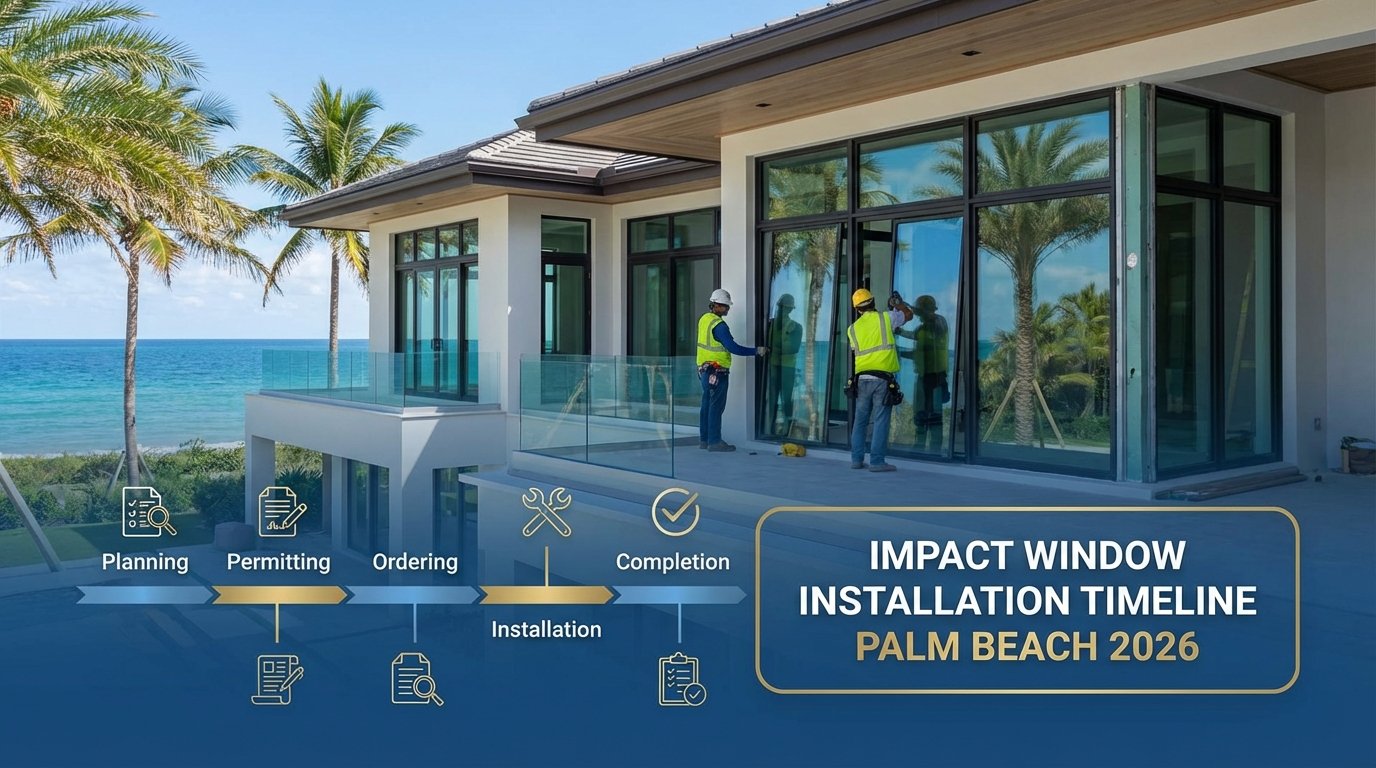
Florida Building Code requires inspections at specific project stages. Understanding this timeline helps homeowners coordinate schedules and recognize what inspectors evaluate at each checkpoint.
Rough Opening Inspection
The first inspection occurs after existing windows or doors are removed but before new impact products are installed. Inspectors examine rough opening dimensions, structural framing, and attachment points. They verify that openings match permit drawings and that structural support can handle wind loads and impact forces the new products will transfer to the building.
For concrete block construction common throughout South Florida, inspectors check that block cells are properly filled and reinforced where required. For wood-frame construction, they verify header sizes, jack stud installation, and that framing members meet span and load requirements. Any structural deficiencies must be corrected before proceeding with installation.
Installation and Anchoring Inspection
This critical inspection verifies proper installation according to manufacturer specifications and NOA requirements. Inspectors examine multiple aspects of the installation:
- Fastener type, size, and spacing: Every anchor point must match NOA specifications exactly. Inspectors count fasteners and measure spacing to ensure compliance.
- Anchor embedment depth: Fasteners must achieve specified embedment into structural elements, whether concrete block, concrete, or wood framing.
- Shimming and alignment: Windows and doors must be properly shimmed for square, level, and plumb installation to function correctly and meet structural performance requirements.
- Sealant application: Inspectors verify appropriate sealant types are used and properly applied to prevent water infiltration.
- Flashing installation: Proper flashing prevents water intrusion and must be installed according to code requirements and manufacturer specifications.
For custom impact glass garage doors, additional mechanical and operational inspections verify that track systems, operator mechanisms, and safety devices are properly installed and function correctly.
Final Building Inspection
The final inspection confirms completed work meets all code requirements. Inspectors verify proper operation of all windows, doors, and garage doors, check final sealant work, review labeling requirements, and ensure all previous inspection corrections have been completed. Upon passing final inspection, the building department issues a Certificate of Completion or Certificate of Occupancy, documenting code-compliant installation.
Common Inspection Issues and How to Avoid Them
Experienced contractors anticipate inspection requirements and avoid common pitfalls that delay projects. Understanding these issues helps homeowners recognize quality workmanship.
Incorrect fastener specifications: Using fasteners that differ from NOA requirements—whether wrong type, size, or spacing—causes immediate inspection failures. Professional contractors reference product NOAs and manufacturer installation instructions throughout the installation process.
Inadequate structural attachment: Impact products transfer significant forces to building structures during hurricanes. Insufficient attachment compromises performance and safety. Inspectors carefully examine all attachment points, and any deficiencies require correction before approval.
Missing or improper labeling: Florida Building Code requires permanent labels on impact windows and doors identifying the product, manufacturer, NOA number, and performance ratings. Missing or incorrect labels result in inspection failures.
Installation deviations from approved drawings: Field modifications that weren’t approved through permit revisions cause inspection problems. Any necessary changes should be documented and approved before installation.
Partnering with contractors who maintain strong relationships with local building departments and understand jurisdiction-specific requirements minimizes inspection delays. Experienced teams schedule inspections appropriately and prepare documentation that streamlines the approval process.
The Role of Engineering in Complex Projects
Some impact window and door projects require engineering documentation beyond standard NOAs. Large openings, non-standard configurations, or installations that modify structural elements typically need engineered drawings stamped by a Florida-licensed engineer. These projects involve additional plan review and may require special inspections by third-party inspectors.
Custom impact glass garage doors often fall into this category due to their size and operational requirements. Engineering ensures these installations meet wind load requirements and function safely. While adding engineering requirements increases project complexity, it provides assurance that installations will perform as intended when hurricanes strike.
Insurance Documentation and Premium Discounts
Passed building inspections and Certificate of Completion provide documentation insurance companies require when applying for premium discounts. Many insurance carriers offer substantial reductions—sometimes 30-45% in coastal areas—for homes with code-compliant impact protection covering all openings.
Maintaining inspection documentation protects these discounts if questions arise during policy renewals or claims. Some carriers conduct their own inspections or request building department records to verify impact protection claims. Proper documentation from code-compliant installations ensures smooth verification.
Working with Licensed Contractors Makes the Difference
Florida Building Code requires that impact window and door installations be performed by licensed contractors. This licensing requirement exists because proper installation demands knowledge of building codes, structural requirements, and product specifications that affect both performance and safety.
Licensed contractors carry required insurance, understand permitting requirements, know what inspectors look for, and have experience navigating the approval process. They schedule inspections at appropriate times, prepare installations to pass review, and handle any required corrections efficiently.
Unlicensed installers may offer lower prices, but the risks far outweigh potential savings. Installations that fail inspections require costly corrections. Worse, improper installations may fail during hurricanes, causing catastrophic property damage and potential injury. Insurance coverage may be denied for unpermitted work or installations that don’t meet code requirements.
Frequently Asked Questions
How do they test impact windows?
Impact windows undergo extensive laboratory testing before receiving Florida Product Approval. Testing includes large missile impact tests where a nine-pound 2×4 lumber piece is shot at the window at specified speeds, followed by cyclic pressure testing simulating hurricane wind forces. Windows must remain intact without dangerous glass fragments or openings that allow wind and water infiltration. Small missile impact testing uses ball bearings to simulate flying debris. Products passing all tests receive NOA approval for use in Florida.
What’s the average cost for impact windows?
Impact window costs in South Florida typically range from $800 to $1,500 per window including installation, depending on size, style, frame material, and glass configuration. Custom shapes, larger sizes, and premium features like high-performance glass increase costs. Impact doors range from $2,000 to $6,000 depending on size and style, while custom impact glass garage doors typically start around $7,000 for single-car doors. These investments provide hurricane protection, insurance savings, energy efficiency, noise reduction, and enhanced security that deliver long-term value.
How to tell if a window is impact rated?
Impact-rated windows carry permanent labels identifying the manufacturer, product name, NOA number, and performance ratings. These labels are typically located on the frame or spacer bar between glass panes. You can verify NOA numbers through the Florida Building Commission’s Product Approval database. Impact windows feature laminated glass—two glass panes bonded to a polymer interlayer—visible when viewing the glass edge. If purchasing a home, request documentation showing impact window installation permits and inspection approvals from the building department.
Do impact windows reduce insurance?
Yes, impact windows typically qualify for significant homeowners insurance premium discounts in Florida. Coverage for all openings with code-compliant impact protection can reduce premiums by 30-45% in coastal areas. Discounts vary by insurance carrier, location, and other policy factors. To receive discounts, homeowners must provide documentation including building permits, inspection approvals, and NOA information to their insurance company. These savings often offset the cost of impact window investment over time while providing crucial hurricane protection.
Protecting Your Investment Through Proper Inspections
Florida Building Code inspections ensure your impact windows, doors, and custom garage doors are installed correctly to provide the protection you expect when hurricanes threaten. These inspections verify code compliance, confirm proper installation techniques, and document that products meet performance standards required in our hurricane-prone region.
Working with experienced, licensed contractors who understand inspection requirements protects your investment and ensures smooth project completion. For South Florida homeowners considering impact protection upgrades, partnering with contractors who maintain Florida Certified General Contractor credentials and established relationships with local building departments ensures professional installations that pass inspections and deliver lasting protection.
If you’re planning impact window, door, or custom impact garage door installation in Palm Beach, Broward, Collier, Martin, Lee, or Charlotte Counties, consult with experienced professionals who prioritize code compliance and quality workmanship. Proper installation and successful inspections provide peace of mind that your hurricane protection will perform when it matters most.